

Why Americans Are Moving to Valencia
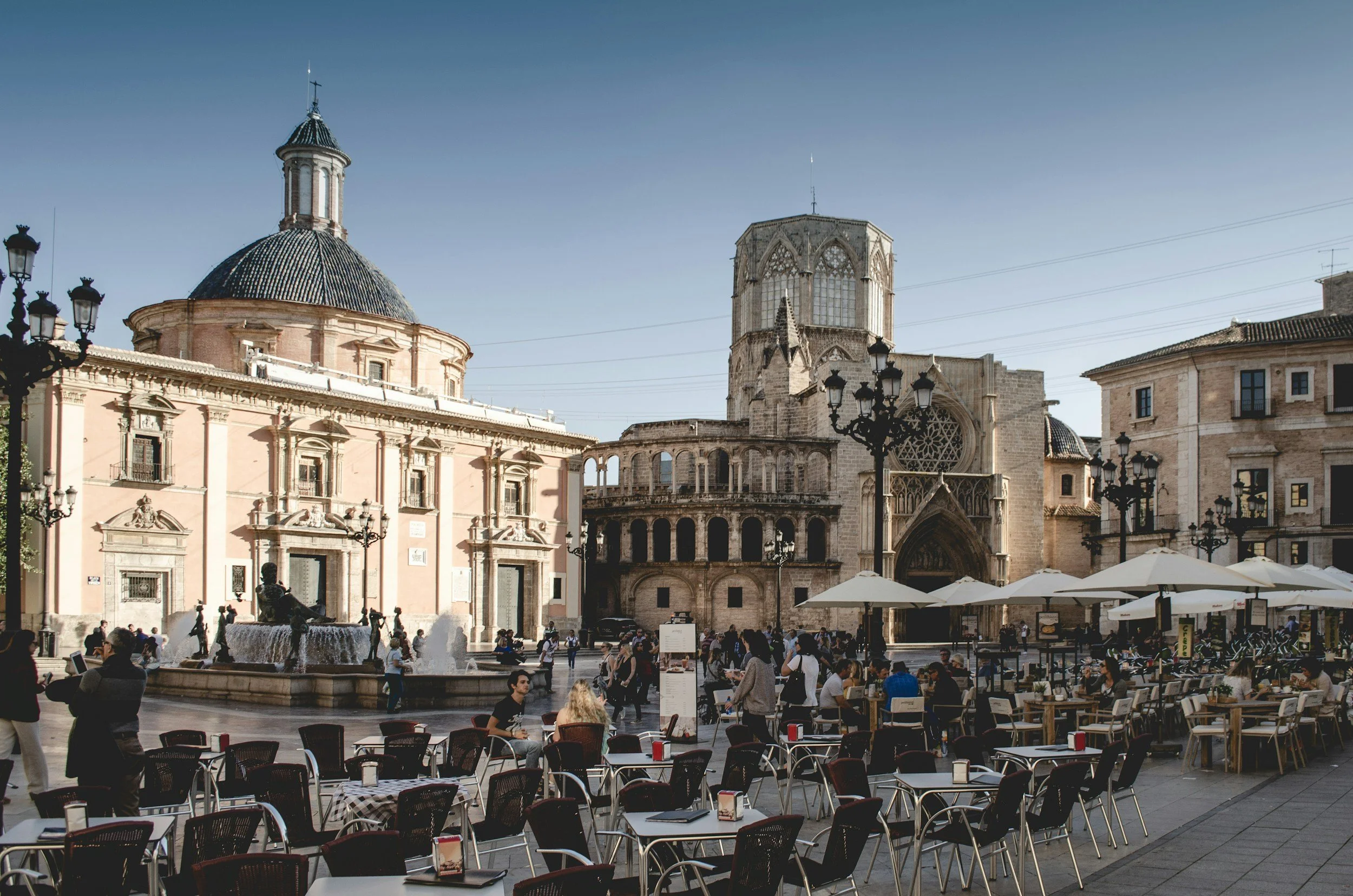
Plaza de la Virgen in Valencia, with the cathedral and outdoor café tables
Ask an American who's moved to Valencia why they did it, and you rarely get a short answer.
"What do you mean why?!" says David Mason, who left Portland, Oregon for the city's old town. "In no order of importance: the Mediterranean climate, the walkability, the Spanish diet and cuisine — delicious, healthy, and eaten at civilized hours — the outdoor café culture, the closeness of Spanish families and couples compared to back home, the cost of living across housing, groceries, restaurants, and even flights compared to the U.S., and the nightlife — there's a real affinity here for American music, blues and rock."
It's the kind of answer that makes sense the moment you've had a coffee on Calle Caballeros at ten on a Tuesday morning, in no rush to be anywhere.
It's Not Just the Sunshine
For Anna and Alejandro de la Cruz, who relocated from Seattle with their three children, the pull was less about any single feature and more about the shape of everyday life.
"We have both lived in Spain before, and ever since starting our family, it's been a dream to return so our children could grow up with the same lifestyle we fell in love with," Anna says. "In the U.S., it often feels like you need a high-pressure, stressful job just to afford a comfortable lifestyle — but then you have very little time left to actually enjoy it. We're looking for a slower, healthier pace where family, wellbeing, and everyday moments come first."
They considered Madrid and Málaga first. "Valencia stood out immediately," she adds — "the energy and opportunities of a vibrant city combined with the beach, the outdoor lifestyle, and a relaxed atmosphere. For us, it's the best of both worlds."
Between David's list and the de la Cruz family's story, a theme runs through both: this isn't a move chasing novelty. It's climate and cost of living, yes, but just as much about pace, community, and closeness — the things that are hardest to find more of back home, no matter how hard you work for them.
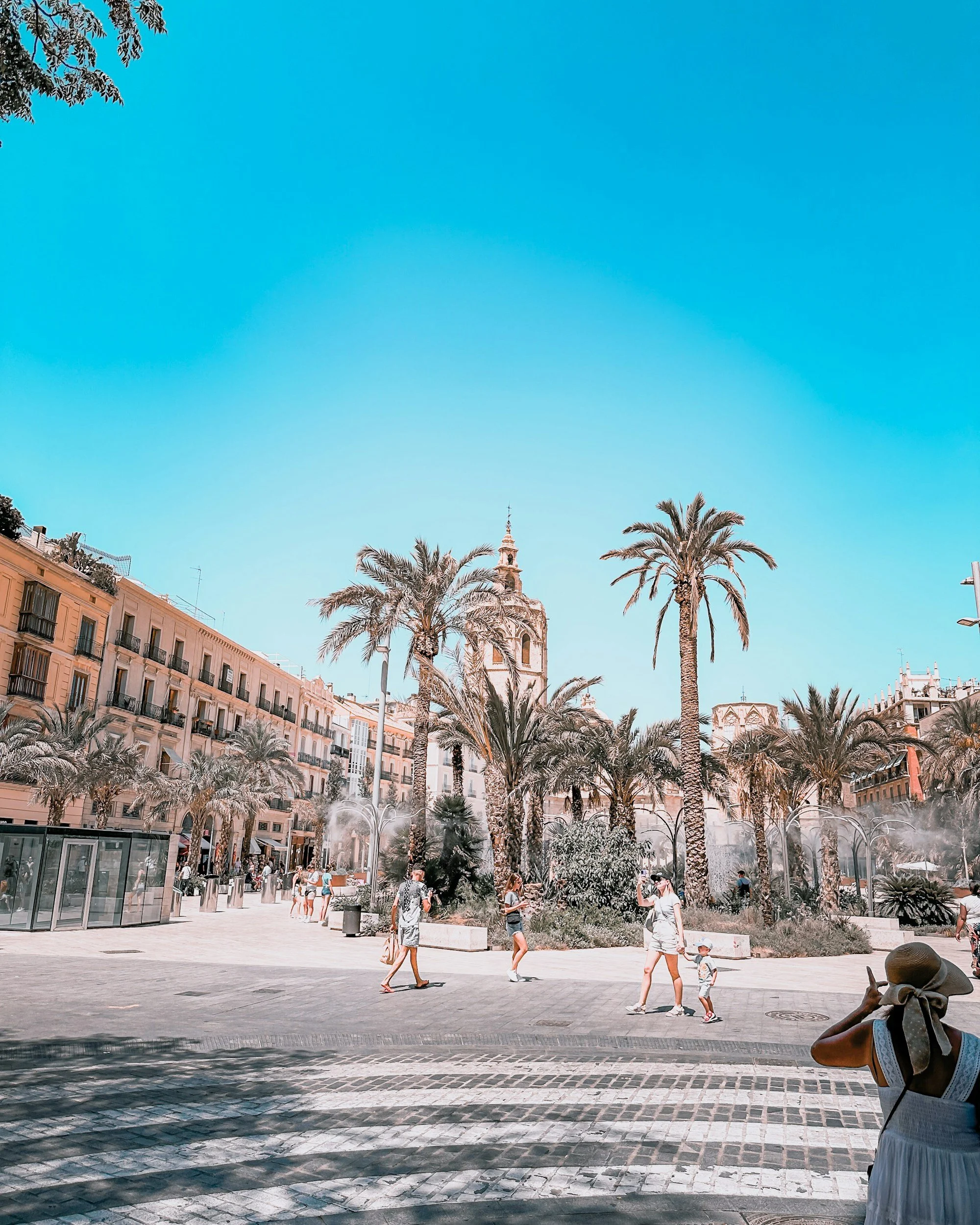
A palm-lined plaza in Valencia with families walking and enjoying the outdoor space
The Numbers Back It Up
Anecdotally this might sound like a trend confined to a few enthusiastic transplants — it isn't. Of the 109 people we helped relocate to Valencia in 2025, 67.3% came from the United States, far ahead of the next closest group. And it wasn't only young remote workers: 40% were couples and another 40% were families with children, spanning ages from their 30s well into their 60s. Entrepreneurs and digital nomads led the pack professionally, followed closely by retirees.
The families among them mostly settled around Eixample, Ciutat Vella, Penya Roja, and Mestalla, with rents typically landing between €2,000 and €2,800 a month — and where children were involved, private schools like American School of Valencia, British School of Valencia, and Julio Verne were the most sought after.
It's Not Always Forever — And That's Fine
Not every American who moves to Valencia stays for good, and it's worth saying so honestly. Some come for a defined chapter — a year or two to soak up the culture and learn the language before life pulls them back. Families are often the ones who leave earliest, usually because older kids miss their friends or a parent's job calls them home. It doesn't take anything away from the people who do stay; it just means going in without a permanent-vacation mindset tends to make the experience better either way.
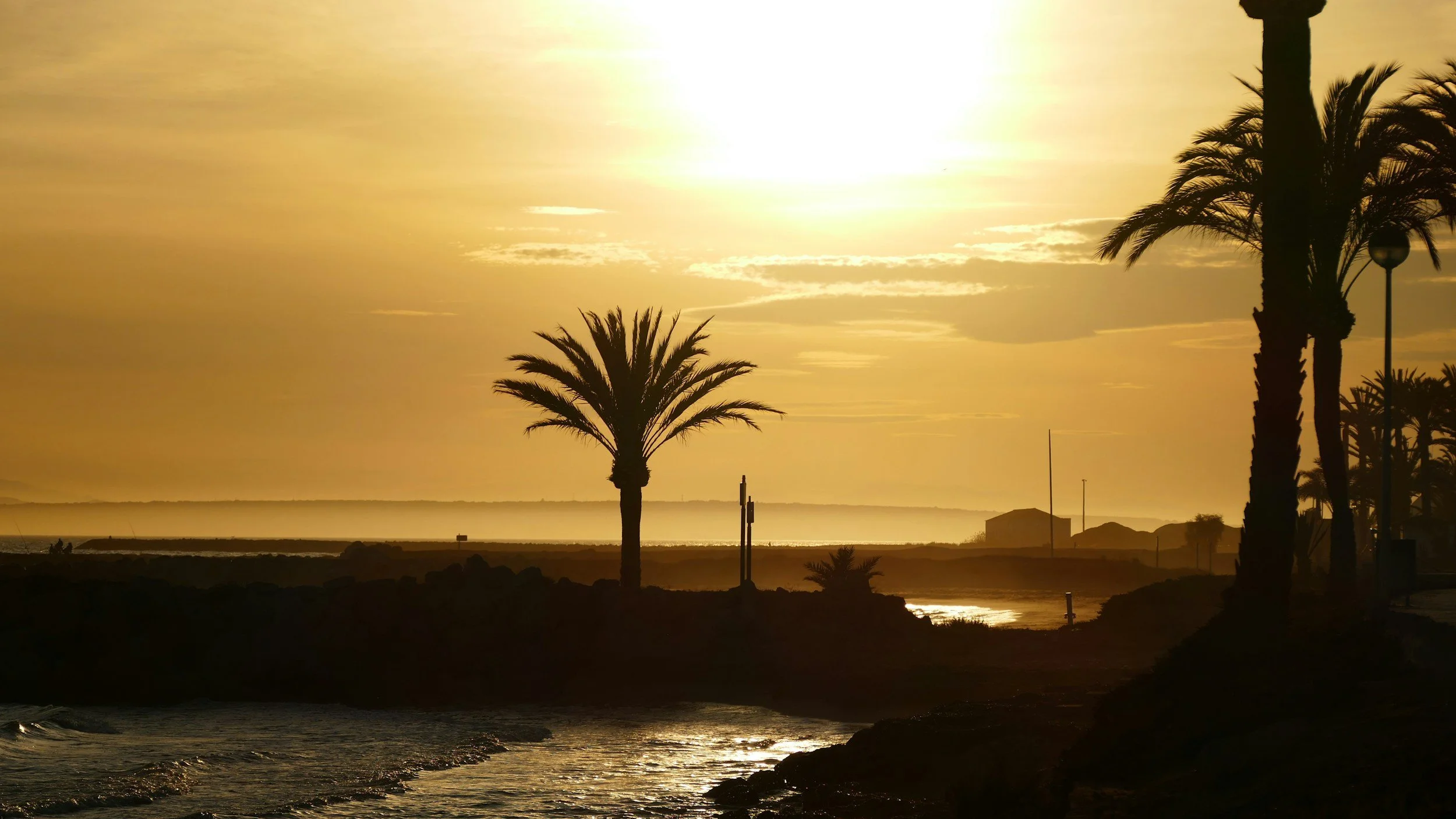
Golden sunset over the Mediterranean coast near Valencia, palm trees silhouetted against the sky
What Makes It Work
Valencia isn't a postcard without a few wrinkles — housing has gotten more competitive as more people discover it, and visa paperwork (worth noting: the property-based Golden Visa route ended in April 2025) takes patience regardless of how badly you want to be here by summer. But for the families and individuals who get the timing and the details right, it's rarely the hard parts they remember a year in. It's the coffee at ten, the walk instead of the commute, and — as David put it — not needing much of a reason at all.
Ready to See What It Could Look Like for You?
If David's list or Anna and Alejandro's story sounds like the life you've been trying to build somewhere else, we'd love to talk you through what it actually takes to get here — visas, neighborhoods, schools, and all the small details that turn "someday" into moving day.
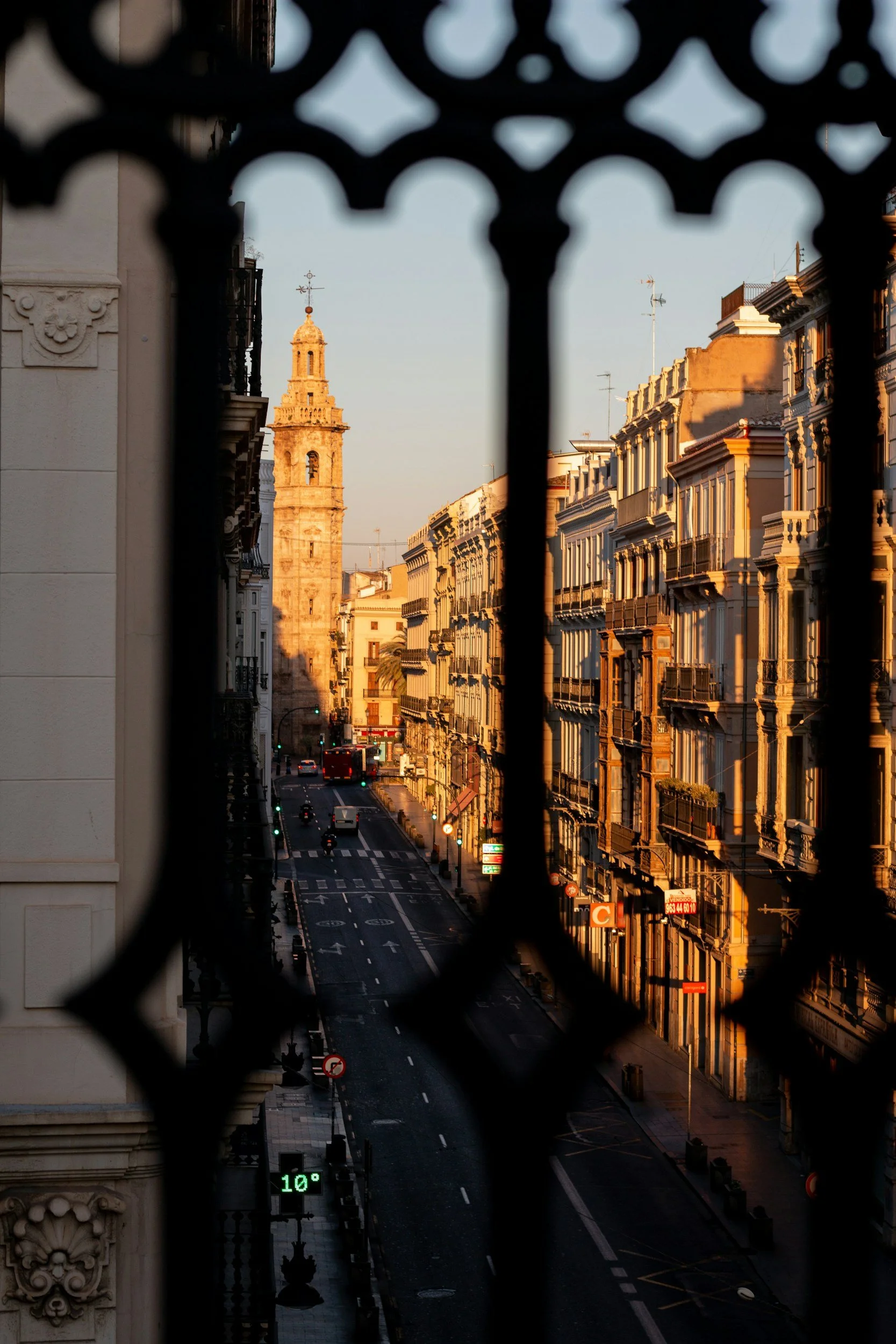
Golden hour view down a Valencia street, with the city's historic bell tower in the distance